
Angkat: The Cambodian Cinderella
Author:
Jewell Reinhart Coburn
Content:
Cinderella
Illustrator:
Eddie Flotte
Publication:
1998 by
Genre:
Fairy Tales, Fiction, Picture Books, World Cultures
Current state:
This book has been evaluated and information added. It has been read but content considerations may not be complete.
Book Guide


Search for this book used on:
In the first English retelling of this ancient Cambodian tale, our heroine goes further, survives more, and has to conquer her own mortality to regain her rightful place. Angkat — child of ashes — endures great wrongs as she seeks to rise above the distresses caused by her own family.
Angkat appeared in an 18th century French essay which was found by Dr. Coburn deep in some dusty archives while she was researching Khmer culture and folklore. This ancient and truly captivating version of the Cinderella story will delight and enthrall readers of all ages.
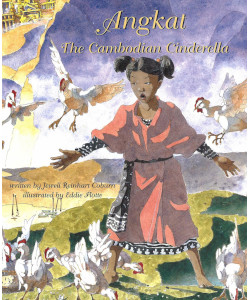
Eddie Flotte, a renowned watercolorist, places the reader in the scene of the story. He broadens the storytelling by effectively employing dramatic expressions, gestures, and ambiance in each illustration. This will be a welcome addition to the bookshelf of every library, classroom, and family.
From the publisher
To view an example page please sign in.

Jewell Reinhart Coburn
AmericanJewell Reinhart Coburn has lived abroad and studied in an array of diverse cultures. She is the recipient of a doctorate in Higher Education Adminis... See more
Please sign in for additional information about this book.

Resource Guide

Podcast
Episode 70: Why Read Fairy Tales?
Released in 2020 by The Literary Life
Available formats: Streaming Audio
Length: 1 hr. 29 min.
View on the The Literary Life site
"Angelina Stanford and Cindy Rollins tackle the topic of fairy stories, discussing the what, why and how of reading them. Angelina shares the distinctive characteristics of fairy stories in contrast to other types of stories, such as myths. They deal with the question of whether fairy tales are 'escapist', the influence of the Grimm brothers scholarly work on interpreting fairy stories, and allowing the story to unveil its deeper truths without forcing meaning onto it.
Angelina gives an illustration of how to see the gospel messages in fairy tales by talking us through the story of Sleeping Beauty. She refutes the ideas that fairy tales are about human romance or are misogynistic. She also highlights some of the Enlightenment and Puritan responses to fairy tales that still linger with us today. Cindy and Angelina also discuss some common concerns such as the magical, weird, or scary aspects of fairy tales. Angelina also makes a distinction between folk tales, literary fairy tales, and cautionary tales."
Find This Book
Search for this book used on: