Favorite Fairy Tales Told in Sweden (Adaptation)
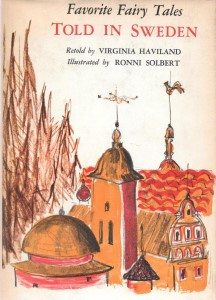
Illustrator:
Ronni Solbert
Virginia Haviland
Publication:
1966 by Little, Brown, and Company
Genre:
Fairy Tales, Fiction, Folk Tales
Series:
Virginia Haviland's Favorite Fairy Tales  Members Only
Pages:
92
Current state:
Basic information has been added for this book.
It is under consideration and will be updated when it is evaluated further.
Book Guide




Search for this book used on:
THE BOY AND THE WATER-SPRITE
A boy outwits a water-sprite to gain his inheritance.THE LAD AND THE FOX
A foolish boy hunts a fox and loses him.THE OLD WOMAN AND THE FISH
What a silly woman does when she is granted three wishes.PINKEL
Pinkel wins a kingdom when he outwits a witch three times.THE OLD WOMAN AND THE TRAMP
A tramp makes a meal fit for a king using his wits and a nail.LARS MY LAD
From the dust jacket
A magic piece of paper gains a palace and a bride for a prince.
To view an example page please sign in.
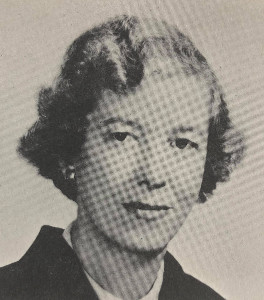
Virginia Haviland
1911 - 1988American
Readers' Advisor for Children, Boston Public Library, Associate Editor of the HORN BOOK MAGAZINE, lecturer in children's literature at Simmons ... See more

Ronni Solbert
1925 -American
Ronni Solbert's paintings have been included in group shows in Detroit, Buffalo, Rochester and Washington. Her travels include Europe, Central Amer... See more
To view reprints of this book please sign in.

Resource Guide

Podcast
Episode 70: Why Read Fairy Tales?
Released in 2020 by The Literary Life
Available formats: Streaming Audio
Length: 1 hr. 29 min.
View on the The Literary Life site
"Angelina Stanford and Cindy Rollins tackle the topic of fairy stories, discussing the what, why and how of reading them. Angelina shares the distinctive characteristics of fairy stories in contrast to other types of stories, such as myths. They deal with the question of whether fairy tales are 'escapist', the influence of the Grimm brothers scholarly work on interpreting fairy stories, and allowing the story to unveil its deeper truths without forcing meaning onto it.
Angelina gives an illustration of how to see the gospel messages in fairy tales by talking us through the story of Sleeping Beauty. She refutes the ideas that fairy tales are about human romance or are misogynistic. She also highlights some of the Enlightenment and Puritan responses to fairy tales that still linger with us today. Cindy and Angelina also discuss some common concerns such as the magical, weird, or scary aspects of fairy tales. Angelina also makes a distinction between folk tales, literary fairy tales, and cautionary tales."
Find This Book
Search for this book used on: