
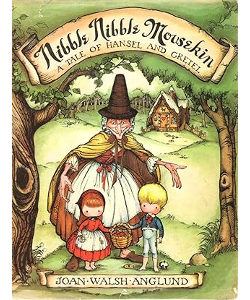
Nibble Nibble Mousekin: A Tale of Hansel and Gretel (Adaptation)
Content:
Hansel and Gretel
Illustrator:
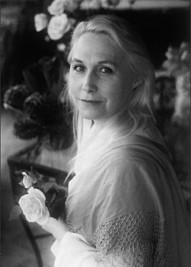
Joan Walsh Anglund
Joan Walsh Anglund
Publication:
1962 by Harcourt, Brace & World, Inc
Genre:
Fairy Tales, Fiction, Folk Tales, Picture Books
Pages:
29
Current state:
This book has been evaluated and information added. It has not been read and content considerations may not be complete.
Book Guide




Search for this book used on:
Generations of children have been held spellbound by the classic story that begins: "Once upon a time, on the edge of a deep, dark forest, there lived a poor woodcutter with his wife and his two children, Hansel and Gretel."
Now Mrs. Anglund, who has endeared herself to young and old with A Friend Is Someone Who Likes You, Love Is a Special Way of Feeling, The Brave Cowboy, In a Pumpkin Shell, and other favorites, has given a new interpretation to this well-loved story. With rich, glowing colors and evocative line, she catches to perfection the mood and the setting of the tale—the remote countryside where the woodcutter and his family live, the brooding, pathless woods in which the children wander alone and lost, the deliciously tempting appearance of the witch's house, and the final happy reunion when evil has been vanquished.
Here is another book that, like Mrs. Anglund's earlier ones, will be treasured by small children—and their elders—everywhere.
From the dust jacket
To view an example page please sign in.
Please sign in to access the type of illustrations and view more books with this type.

Resource Guide

Podcast
Episode 70: Why Read Fairy Tales?
Released in 2020 by The Literary Life
Available formats: Streaming Audio
Length: 1 hr. 29 min.
View on the The Literary Life site
"Angelina Stanford and Cindy Rollins tackle the topic of fairy stories, discussing the what, why and how of reading them. Angelina shares the distinctive characteristics of fairy stories in contrast to other types of stories, such as myths. They deal with the question of whether fairy tales are 'escapist', the influence of the Grimm brothers scholarly work on interpreting fairy stories, and allowing the story to unveil its deeper truths without forcing meaning onto it.
Angelina gives an illustration of how to see the gospel messages in fairy tales by talking us through the story of Sleeping Beauty. She refutes the ideas that fairy tales are about human romance or are misogynistic. She also highlights some of the Enlightenment and Puritan responses to fairy tales that still linger with us today. Cindy and Angelina also discuss some common concerns such as the magical, weird, or scary aspects of fairy tales. Angelina also makes a distinction between folk tales, literary fairy tales, and cautionary tales."

Find This Book
Search for this book used on: