Of Swans, Sugarplums, and Satin Slippers: Ballet Stories for Children (Adaptation)
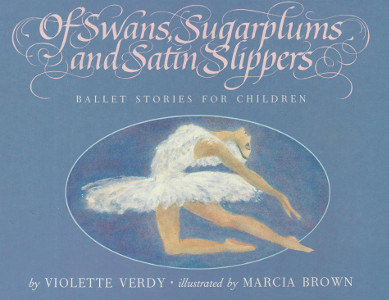
Illustrator:
Marcia Brown
Violette Verdy
Publication:
1991 by Scholastic
Genre:
Anthology, Dance, Fairy Tales, Fiction, Folk Tales, Historic Tales and Legends, Mythology
Pages:
90
Current state:
Basic information has been added for this book.
It has been read but content considerations may not be complete.
Book Guide




Search for this book used on:
Handsome princes. Evil sorcerers. Swan maidens, and a bird of fire! Like all great fairy tales, the stories of the ballet are filled with magic. In Of Swans, Sugarplums and Satin Slippers, internationally famous ballerina Violette Verdy and Caldecott-winning artist Marcia Brown bring these six wonderful fantasies to life for children.
Here are the best-loved ballets every: in the romantic Swan Lake, a prince falls in love with the enchanted Swan Queen; Giselle tells of a well-meaning but thoughtless young Count who romances an innocent peasant girl—and nearly pays with his life. Swanilda and Franz, two silly lovers, quarrel comically over a rival in Coppélia; and a brave Tsarevich, aided by a magnificent bird of fire, tries to free the princess he loves in The Firebird. Sleeping Beauty is the ballet version of the familiar Perrault tale. And, of course, there's The Nutcracker, the charming Christmas story of a young girl and the wooden doll who comes to life and takes her to the delicious Land of Sweets.
Each story has an introduction that tells the history of the ballet, along with some personal reminiscences that only a ballerina who has danced in each of these ballets could provide.
From the dust jacket
To view an example page please sign in.

Violette Verdy
FrenchIn January, 1969, dance critic Clive Barnes wrote the following in The New York Times: "Violette Verdy is special. She is perhaps the most daring an... See more
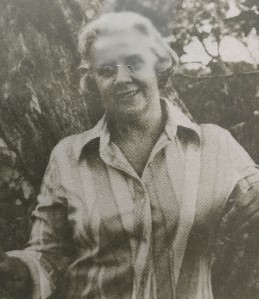
Marcia Brown
1918 - 2015American
Marcia Brown has twice won the Caldecott Medal (for Cinderella and Once a Mouse...) and six of her books have been Caldecott Hon... See more

Resource Guide
Podcast
Episode 70: Why Read Fairy Tales?
Released in 2020 by The Literary Life
Available formats: Streaming Audio
Length: 1 hr. 29 min.
View on the The Literary Life site
"Angelina Stanford and Cindy Rollins tackle the topic of fairy stories, discussing the what, why and how of reading them. Angelina shares the distinctive characteristics of fairy stories in contrast to other types of stories, such as myths. They deal with the question of whether fairy tales are 'escapist', the influence of the Grimm brothers scholarly work on interpreting fairy stories, and allowing the story to unveil its deeper truths without forcing meaning onto it.
Angelina gives an illustration of how to see the gospel messages in fairy tales by talking us through the story of Sleeping Beauty. She refutes the ideas that fairy tales are about human romance or are misogynistic. She also highlights some of the Enlightenment and Puritan responses to fairy tales that still linger with us today. Cindy and Angelina also discuss some common concerns such as the magical, weird, or scary aspects of fairy tales. Angelina also makes a distinction between folk tales, literary fairy tales, and cautionary tales."

Find This Book
Search for this book used on: