The Complete Hans Christian Andersen Fairy Tales

Author:
Hans Christian Andersen  Information you may want to know about this author
Editor:
Lily Owens
Publication:
1981 by Avenel Books
Simultaneously published by:
Crown Publishers
Genre:
Anthology, Fairy Tales, Fiction, World Cultures
Pages:
803
Current state:
Basic information has been added for this book.
It is under consideration and will be updated when it is evaluated further.
Book Guide




Search for this book used on:
This newly compiled collection of 159 fairy tales is the largest anthology of the master storyteller in print today, Hans Christian Andersen is celebrated throughout the world for fairy tales that continue to live as they are passed on from one generation to another. Here, we rediscover such old favorites as "The Ugly Duckling," "The Little Match-Seller," and "Thumbelina." Just as exciting is the opportunity to become acquainted with Andersen's lesser known, though equally memorable, tales. For the genius of Andersen is not fully appreciated until the rich variety and depth of his literary imagination is experienced.
"The Shirt Collar" delights with its witty playfulness. "The Story of a Mother" is a moving portrayal of a mother's tragic plight. Aunty Toothache, Lucky Peer, Anne Lisbeth: each has an unforgettable story. Whether comedy, tragedy or morality tale, the stories abound with poetry and subtleties, and commend themselves to people of all ages.
Full-page illustrations by six distinguished artists highlight the book. Among them are the graceful illustrations of Henry Justice Ford and Hans Richter, the out-standing, realistic portrayals of Hans Tegner, and the charming frontispiece by Arthur Rackham.
From the dust jacket of the 1984 Gramercy edition
To view an example page please sign in.
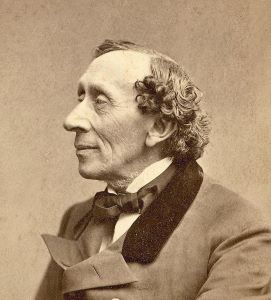
Hans Christian Andersen
1805 - 1875Danish
Mr. Hans Christian Andersen himself thought very little of his famous book, Fairy Tales Told for Children. Indeed he called the stories "a mere sleigh... See more

Resource Guide
Podcast
Episode 70: Why Read Fairy Tales?
Released in 2020 by The Literary Life
Available formats: Streaming Audio
Length: 1 hr. 29 min.
View on the The Literary Life site
"Angelina Stanford and Cindy Rollins tackle the topic of fairy stories, discussing the what, why and how of reading them. Angelina shares the distinctive characteristics of fairy stories in contrast to other types of stories, such as myths. They deal with the question of whether fairy tales are 'escapist', the influence of the Grimm brothers scholarly work on interpreting fairy stories, and allowing the story to unveil its deeper truths without forcing meaning onto it.
Angelina gives an illustration of how to see the gospel messages in fairy tales by talking us through the story of Sleeping Beauty. She refutes the ideas that fairy tales are about human romance or are misogynistic. She also highlights some of the Enlightenment and Puritan responses to fairy tales that still linger with us today. Cindy and Angelina also discuss some common concerns such as the magical, weird, or scary aspects of fairy tales. Angelina also makes a distinction between folk tales, literary fairy tales, and cautionary tales."
Find This Book
Search for this book used on: